Carus Chemical Lied to the EPA about the Apollo Warehouse

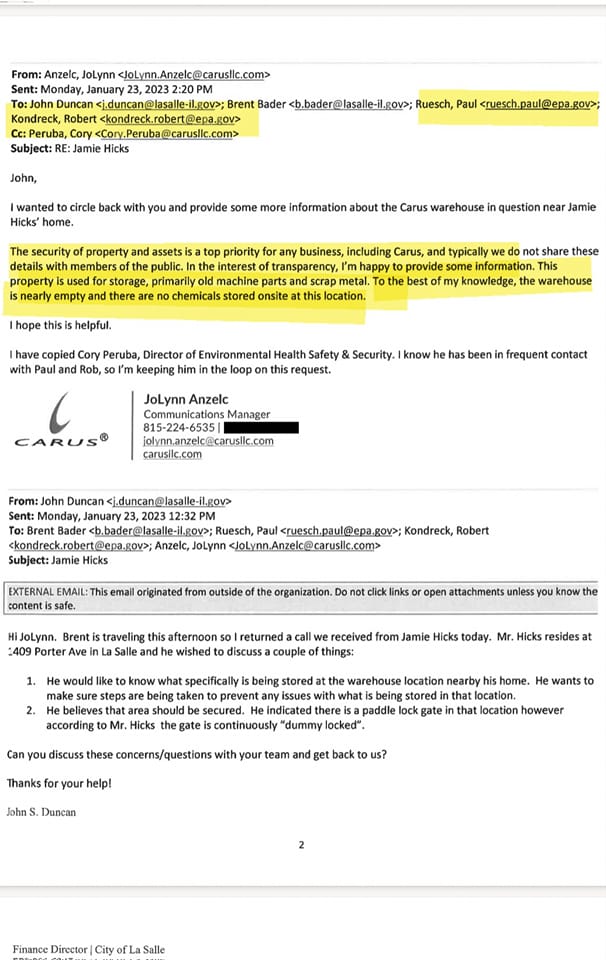
Carus Chemical told the EPA they didn’t know what was inside the Apollo Warehouse, a building that is on their property, located next to a residential neighborhood, separated by a chain-link fence.

Meanwhile, 4 days after this email exchange between Carus Chemical and the EPA, Carus was photographed and filmed hauling 7 truckloads of unlabeled barrels and pallets out of the Apollo warehouse building, and transporting them to a tier 2 chemical storage facility, formerly known as the the Ottawa South Towne Mall, as can be seen in this video. https://www.facebook.com/jamie.hicks.547/videos/1802914950093166

Carus did not expect for neighbors to be so upset after their chemical plant blew up, and rained chemicals on the neighborhood, that the neighbors would learn how to use FOIA to gather evidence, then follow and photograph Carus’ every move.

Watching Carus scramble in attempt to hide these chemicals and move them out of the building where they are being illegally stored has been somewhat amusing.

Unfortunately, the City of LaSalle is helping Carus in their cover-up, as they provided a police escort for Carus’ semis to haul the illegally stored chemicals to a proper facility before the EPA came to inspect.

In addition, the semis did not have hazmat placards on them.

Emails obtained through FOIA have revealed that Carus contacted the chief of police and asked for off-the-clock officers to provide private security 24/7 for the next few weeks.

The chief responded by saying he will check with the officers and put together a schedule.

Who will these officers be loyal to in light of illegal activity – citizens or the polluter that is paying them?
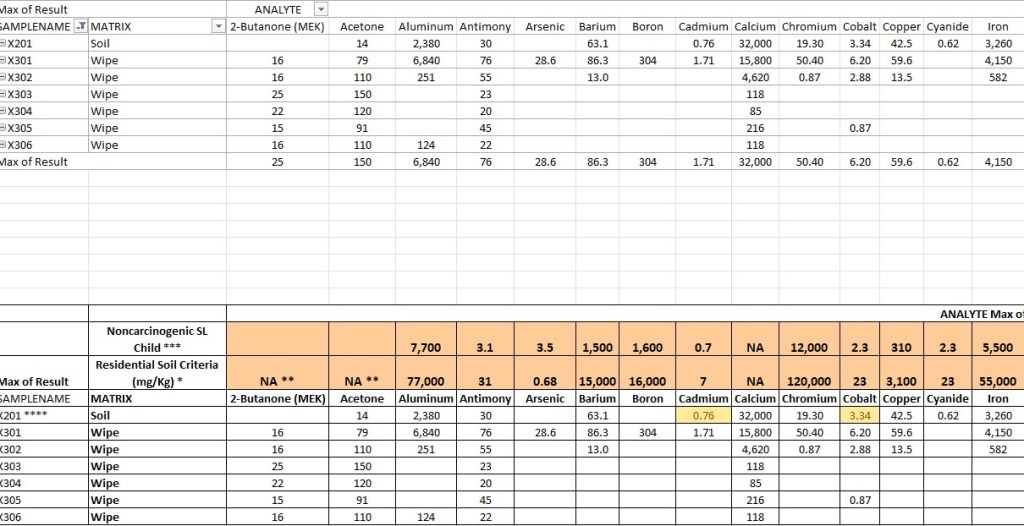
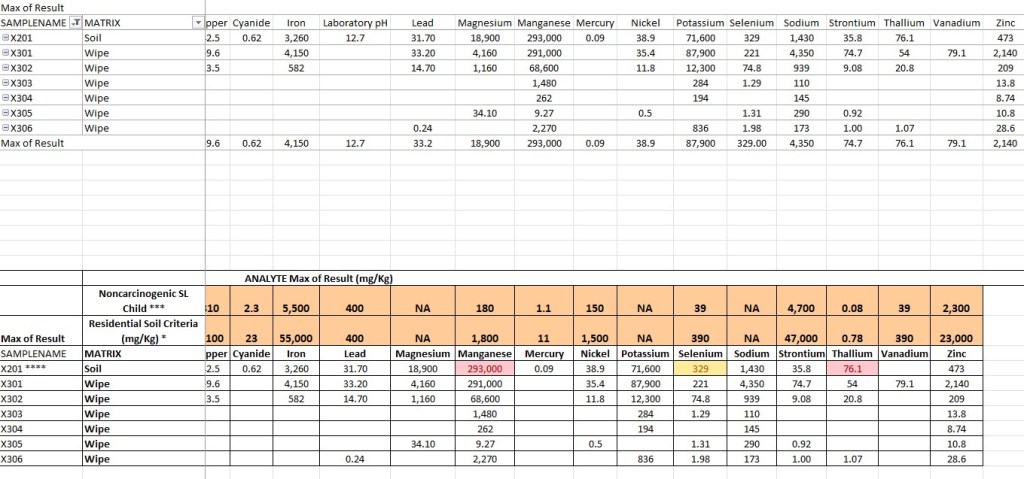
EPA Test Results & Sierra Club analysis of chemical samples taken 1/12/23 following the Carus Chemical explosion & fire

Sierra Club Analysis & Notes:

Sierra Club Analysis

The below information was provided by the Sierra Club:

Results compared to RSL in soil

The results for two metals, Manganese and Thallium were above the EPA regional screening levels (RSL) for residential soil. Three results, Selenium, Cadmium and Cobalt, were above the Noncarcinogenic Screening Levels – Child criteria.  The following are brief descriptions of the hazards of each of these metals. Keep in mind that the described health impacts are based on chronic exposures that are above the listed screening levels and do not describe the effect of a single acute exposure.

  • Manganese: Manganese in water poses minimal hazards, however, manganese is soil or dust does pose a significant hazard, especially through inhalation. Manganese toxicity can result in a permanent neurological disorder known as manganism with symptoms that include tremors, difficulty walking, and facial muscle spasms. These symptoms are often preceded by other lesser symptoms, including irritability, aggressiveness, and hallucinations. The average manganese soil concentrations in the United States is 40–900 mg/kg. Source: ATSDR – CDC. The maximum manganese level in this one soil sample was 293,000 mg/Kg. The screening level for a child that is listed is primarily based on ingestion of Manganese. The inhalation screening level for a child is 7,100 mg/Kg.
  • Thallium: Thallium blood concentration levels are normal below 2 µg/L, and toxic at concentrations greater than 200 µg/L. DELAYED EFFECTS OF EXPOSURE: Long-term effects of thallium exposure can include difficulty walking, various involuntary movement disorders, and impairment of thought and mood. Source: NIOSH – CDC High concentration of thallium in shallow soil also poses a notable threat due to possible uptake by plant roots and storage in plant biomass. As a result, thallium may enter the food chain and accumulate in living organisms, causing severe disorders and ultimately becoming fatal. Source: National Library of Medicine. The screening level for a child that is listed is primarily based on ingestion of Thallium.
  • Selenium: Selenium is a naturally occurring mineral required for good health. It is obtained from food, and the recommended dietary allowance is 55 μg/d for persons 14 years or older, with a tolerable upper intake limit of 400 μg/d. Selenium toxicity can occur with acute or chronic ingestion of excess selenium. Symptoms of selenium toxicity include nausea; vomiting; nail discoloration, brittleness, and loss; hair loss; fatigue; irritability; and foul breath odor (often described as “garlic breath”). Source: National Library of Medicine. The screening level for a child that is listed is primarily based on ingestion of Selenium.
  • Cadmium: Cadmium (Cd) is a post-transition metal that has been found to exhibit biological toxicity that is “teratogenic, carcinogenic, and mutagenic.” It is easily absorbed by crops, causes harm to crop growth and development, affects crop quality and yield, and, as part of the food chain, leads to damage to the lungs, liver, kidneys, bones, and reproductive organs, causes toxic effects to the immune and cardiovascular systems, and is associated with various diseases. The Agency for Toxic Substances and Disease Registry (ATSDR), lists Cd as the sixth most toxic substance that endangers human health. Source: National Library of Medicine. The screening level for a child that is listed is primarily based on ingestion of Cadmium.
  • Cobalt: Cobalt is a natural element found throughout the environment.  Acute (short-term) exposure to high levels of cobalt by inhalation in humans and animals results in respiratory effects, such as a significant decrease in ventilatory function, congestion, edema, and hemorrhage of the lung. Respiratory effects are also the major effects noted from chronic (long-term) exposure to cobalt by inhalation, with respiratory irritation, wheezing, asthma, pneumonia, and fibrosis noted.  Cardiac effects, congestion of the liver, kidneys, and conjunctiva, and immunological effects have also been noted in chronically-exposed humans.  Cobalt is an essential element in humans, as a constituent of vitamin B12.  Human studies are inconclusive regarding inhalation exposure to cobalt and cancer.  EPA has not classified cobalt for carcinogenicity. Source: US EPA. The screening level for a child that is listed is primarily based on ingestion of Cobalt.
  • Potassium: Note that there is no EPA RSL or SL for Potassium but the maximum level in the soil sample was 71,600 mg/Kg (ppm). Potassium is a major plant nutrient. Healthy levels of potassium in soil range from 40 to 80 ppm. There are no severe health impacts related to ingestion or exposure to potassium. However, your total intake of potassium should not be greater than the recommended amounts, unless ordered by your doctor. In some cases, too much potassium may cause muscle weakness, confusion, irregular heartbeat, or difficult breathing. Source: Mayo Clinic

I don’t know what criteria that Brownfield, the City or EPA will use as comparison of the results. That is why I used listed Generic Regional Screening Levels. Besides comparing each result to some criteria, Cumulative Impacts are something that needs to be considered by the responsible parties. Many of the symptoms of over-exposure to these metals are common and result in similar endpoints and so, in a cumulative or additive manner, can be more harmful in combination.

From Farmland to Fracksand

Frac sand mine in Utica, Illinois, located on Route 6 near Starved Rock State Park. Photo by: Lisa Held

In the Midwest, fertile soil is being excavated in pursuit of fossil fuels, while communities suffer.

By: Lisa Held, Civil Eats

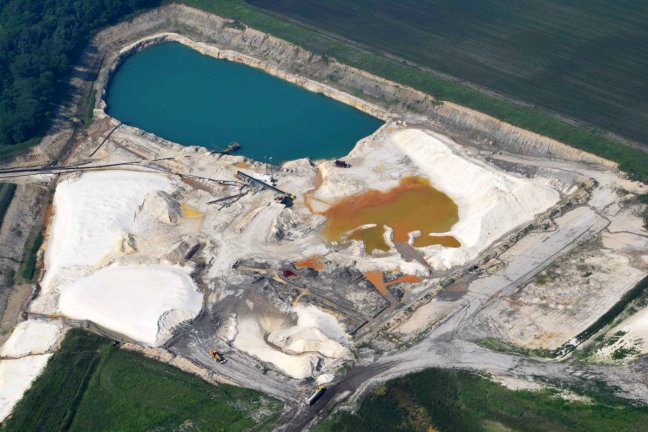
One Monday in June, excavators were tearing into a field in Wedron, Illinois where the nubs of last season’s dried corn stalks were still sticking out of the ground. Behind where the crew worked, strips of earth had been carved out like steps on a wide staircase descending to the bottom of a deep pit. On the far side, fine sand the color of snow was piled in front of soaring, solid walls of sandstone. Picture standing on a ledge looking down into the biggest rock quarry you’ve ever seen. Then, enlarge that image 100 times, whitewash it, and add turquoise blue pools of wastewater. This is silica mining.

Fracking, a process used to extract natural gas and petroleum, depends on silica sand, or “frac sand” to produce the fossil fuels. A single fracking site can use millions of pounds of sand. The sand is blasted into wells to keep fissures in the rock open so that oil and gas can be released.

In the Midwest, farmland is being irreversibly lost in pursuit of silica sand.

Wedron Silica, which is now owned by Ohio-based Covia, has been expanding this particular mine for years and now owns at least 2,500 acres in and around the tiny village. It’s just one of several that Covia owns across LaSalle County, Illinois, 90 miles southwest of Chicago. Here, U.S. Silica, Smart Sand, and other companies are also actively mining.

Together, the companies have purchased hundreds of parcels of land and now own more than 9,000 acres in LaSalle, a Civil Eats investigation has found. The majority of those acres are former or current farmland. Silica mining is also prevalent in other parts of Illinois and regions of Wisconsin and Missouri.

Read full article: https://civileats.com/2022/07/19/from-farmland-to-frac-sand/

Frac Sand Mining near Starved Rock State Park, La Salle County, Illinois, YouTube videos