Explosion Draws Scrutiny to Illinois Chemical Company

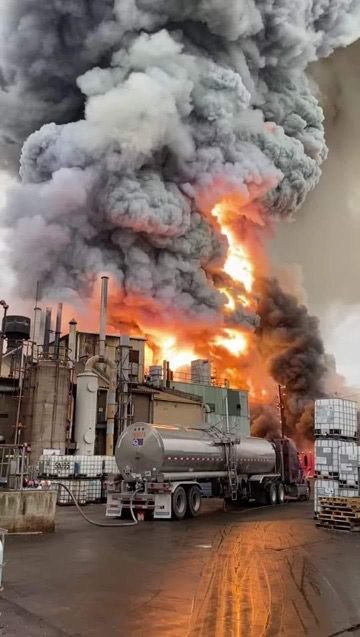
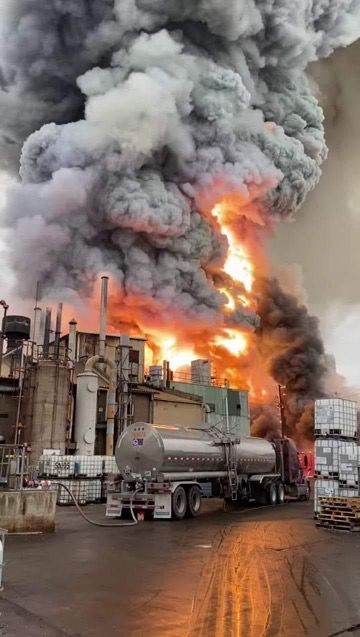
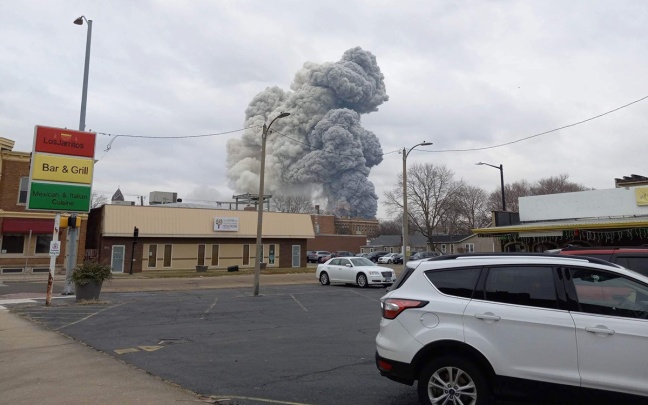
Cloud of smoke bellowing at Carus Chemical during the fire and explosions in LaSalle, Illinois.

Story by Karry King Edited by: Ben Westhoff

On the morning of January 11, a chemical manufacturing warehouse in La Salle, Illinois exploded.

Orange flames ascended into a thick black cloud over the rural town, ninety miles southwest of Chicago. Over one million pounds of a chemical called potassium permanganate were released into the atmosphere, and the purple residue coated roofs, decks, cars, and yards. Streams of purple runoff flowed into the river via storm drains, according to reports.  

La Salle’s fire chief ordered residents to stay in their homes and students to stay in their schools.

“I had purple stuff on my face and in my hair,” said Jamie Hicks, a LaSalle resident caught outside when it happened.

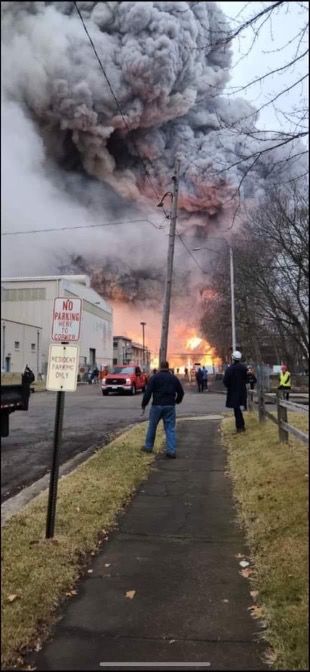
No alarms sounded. Townspeople could see smoke but didn’t know where it was coming from and wondered what was going on.

The company’s primary product, potassium permanganate, is best known as a chemical for treating municipal drinking water, and it is also used in mining, fracking, and refining crude oil. Illicit drug manufacturers also make cocaine with it, though there is no evidence that Carus’ chemicals are diverted for this purpose.

The explosion took place after a bag of potassium permanganate was accidentally torn open by a forklift while being loaded. Known to enhance combustion, the chemical ignited a piece of cardboard, and the fire quickly spread through the warehouse, causing several explosions. The U.S. Department of Labor fined Carus $14,000 for putting their workers’ lives in danger.

The company advised community members to use peroxide and vinegar to clean their homes, and offered free car washes. Sales representatives visited homes to assess the damage and assured residents that the chemicals were safe, say locals.

“This stuff etched into fiberglass on my boat,” said La Salle resident Don Gaddis. “[It] physically burnt right into the gel coat. It ate the paint off my vehicles…. But they’re telling us it’s safe.” (The company did not respond to our request for comment, but has made public claims about its chemicals’ safety, such as that fallout can be “safely rinsed away with water.”)

Metals including barium, manganese, copper, and lead have shown up in the soil, drinking water, and air filters inside residents’ homes.

La Salle residents Marty Schneider, Mark Schneider (Peru) and Jamie Hicks hold protest signs in front of Carus Chemical Company’s headquarters in Peru, Illinois, in April 2023, after the company refused to give the City of LaSalle its insurance providers name. The community held several protests outside of the company’s headquarters before it finally agreed it a town hall meeting in May at L-P Highschool. Photo by Katie Dumke Troccolli

Angry neighbors have held protests outside Carus’ headquarters. Convinced that the media isn’t telling the full story, they’ve also requested documents through the Freedom of Information Act from the EPA and state and local governments.

After five months of protests, Carus finally held a town hall meeting at the local high school on May 10. La Salle residents questioned Carus executives for two hours about the company’s history, practices, and EPA violations.

Some were upset that Carus stored chemicals near their homes in a building without a permit, neglecting to inform residents that it contained potassium permanganate, which is an explosive chemical.

“You could have killed all of us!” shouted Linda Battaglia at the meeting. “Sorry means nothing if there’s no action behind it.” 

Erik Dyas, a certified hazardous materials trainer, said Carus should have enlisted a HazMat team to clean up the spill.

“Is the reason you didn’t call HazMat because it costs money?” asked Dyas. “If you’re putting your workers in danger, shame on you, not to mention you’re endangering everybody else.”

Photo by Karry King

The uproar stands in contrast to the company’s previous peaceful coexistence with its neighbors in La Salle, where it has operated for over 100 years.

Its founding family members emigrated from Germany in 1856 to start a smelting company, choosing La Salle because of its resources — coal and zinc — and its proximity to the Illinois River and I & M Canal. They supplied zinc for Union armaments during the Civil War.

In 1915, grandson Edward Hegeler Carus began making potassium permanganate in a bathtub in the horse barn behind the family’s mansion after learning supplies had been cut off from Germany. He sold it to the U.S. government to use in explosives.

During the second World War, Carus Chemical supplied potassium permanganate to the U.S. government and was honored by the Navy for their contribution.

Edward’s son Blouke studied chemistry under Nobel Prize-winning chemist Hermann Staudinger at the University of Freiburg, Germany. After returning to the U.S. in 1951, Blouke and his brother Paul took over the management of Carus and revolutionized how potassium permanganate was made. By 1961, the company began marketing directly to U.S. cities. Today their chemical is used in over 50 percent of water consumed in the U.S.

Blouke’s daughter, Inga Carus, took over as Carus chairman in 2005, and Carus has continued dominating the industry, expanding across the globe. The company has opened branches in China and Spain, and remains in the midst a $20 million expansion of the La Salle plant, having resumed production and shipping within a week of the January explosion.

Yet many La Salle residents continue to be furious about the explosion and its fallout, saying it has negatively impacted their health, and that the company hasn’t taken full responsibility.

Lisa Dyas, who lives near the explosion site, says her 14-year-old son spent weeks in the hospital with severe pneumonia after the fire, and the fluid had barely left his lungs four months later.

“The chemical burned a hole in my chair. Don’t tell me it’s not harmful,” said Dyas.

April Stevenson, a La Salle single mom, said she had to get three teeth pulled because of infection from the chemicals and couldn’t breathe properly when Carus resumed production. She was forced to visit the emergency room twice, and her kids became sick with respiratory issues and infections. Others complain of headaches, racing heartbeats, nausea, and sick pets.

Stevenson said Carus’s insurance rejected her medical claims and offered her only $774 — for her ruined bicycles. Many residents want a full federal investigation of the company.

“Cancer and dementia are too common in our area,” said Marty Schneider, whose yard is full of dust from the factory’s smokestacks. “My dog gets sick as hell every time that stuff is in my yard. People are getting sick. It’s time [for Carus] to start being honest.”

The company said it has received over 100 insurance claims from affected residents; some used their personal carriers instead of going through Carus, and others refused to accept a settlement that required signing a form exempting Carus from future liability.

Reads the release: “The Releasor…will not make any statements, comments, or communications that … may be considered to be derogatory or detrimental to [Carus’] good name or business reputation.”

Karry King, a student at the University of Florida College of Journalism and Communications, originally hails from the Illinois Valley. She has been covering chemical contamination and mining issues in the area since 2014. www.karryaking.wordpress.com
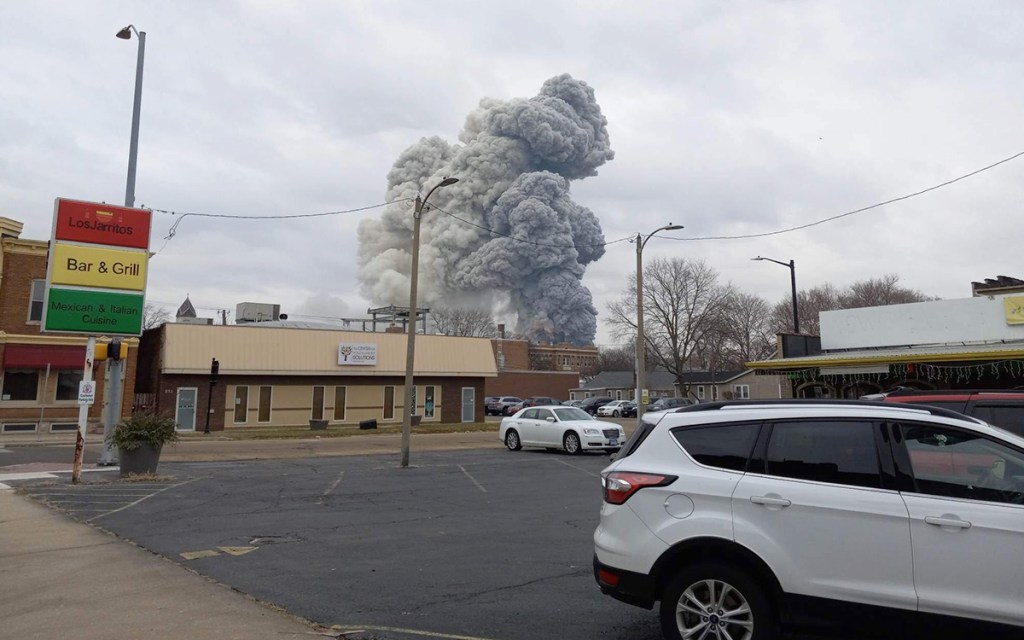
Cloud of smoke bellowing at Carus Chemical during the fire and explosions in LaSalle, Illinois.

Carus Chemical’s ‘Serious’ OSHA Violation & Supreme Court Case: ‘Willful and Wanton Misconduct’

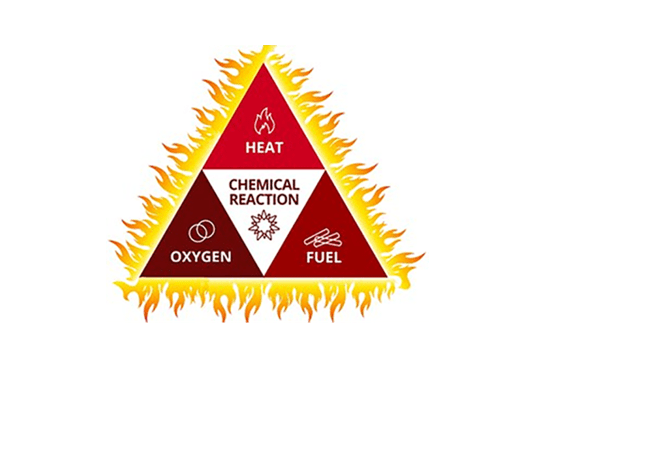
Fire Triangle Carus Chemical OSHA Violation

by: Karry King

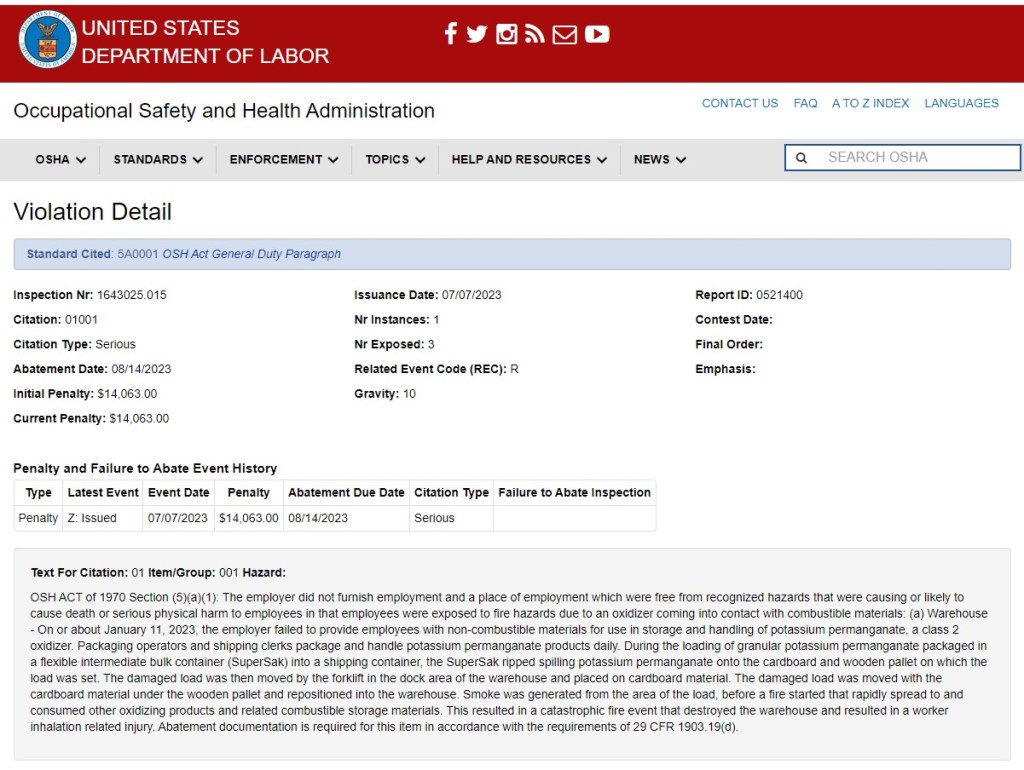
The U.S. Department of Labor Occupational Safety and Health Administration (OSHA) fined Carus Chemical $15,191 and issued two citations resulting from the January fire at their manufacturing plant in La Salle, Illinois. Carus is contesting the violations and fines that were issued after the investigation was completed on July 7, 2023.

One of the violations has a gravity of ten, which OSHA spokesman Scott Allen said is the most serious violation a company can receive. “This means it could have resulted in a serious injury or fatality,” said Allen.

According to the citation, “[Carus] failed to provide employees with non-combustible materials for use in storage and handling of potassium permanganate,” and their actions were “likely to cause death or serious physical harm to employees in that employees were exposed to fire hazards due to an oxidizer coming into contact with combustible materials.”

The fire, which rapidly spread through the warehouse and resulted in several explosions and the formation of a chemical cloud that caused chemicals to rain onto the community, started after a bag of potassium permanganate was ripped open while being loaded into a semi.

The damaged bag was placed on cardboard and moved to a different location in the warehouse. The chemical that spilled onto the floor was cleaned up and put in a plastic bucket.

Security camera footage obtained from the Illinois State Fire Marshal shows the pallet with the bucket and cardboard being pushed across the warehouse floor by a forklift with a trail of black powder behind it. Smoke and flames can be seen within seconds of the pallet being put into place. Security cameras from outside the warehouse show multiple explosions coming from inside the warehouse as the product spontaneously combusted.

Security Camera Footage and Illinois State Fire Marshal Report: https://www.youtube.com/watch?v=P744cEWzQVE

Explosions: https://www.youtube.com/shorts/MfTr5ZeUYAQ

Denise Trabbic-Pointer, a chemical engineer and certified hazardous material manager emeritus, who is volunteering in La Salle, said the cardboard provided fuel for the strong oxidizing agent, potassium permanganate. According to the fire marshal report, heat was created from the friction of the pallet dragging across the warehouse floor, which ignited the potassium permanganate and started the cardboard on fire.

Fire Triangle Carus Chemical OSHA Violation

“The potassium permanganate continued to propagate the fire and caused a much larger fire with all the surrounding combustible materials in the warehouse,” said Trabbic-Pointer.

Carus is no stranger to potassium permanganate spontaneously igniting when it touches cardboard. In 1986, the company lost a case before the New Jersey Supreme Court, Mahoney v. Carus Chemical Co., Inc., in which it was sued by Thomas Mahoney, a firefighter who was injured when he responded to a fire that broke out at Inversands, a customer that Carus shipped potassium permanganate packaged in fiber-cardboard drums.

Mahoney v. Carus Chemical Co., Inc. https://law.justia.com/cases/new-jersey/supreme-court/1986/102-n-j-564-0.html

Internal documents obtained by the court revealed that Carus was aware of the risks of using fiber drums and discussed installing a sprinkler system in the warehouse as a preventative measure. Court documents state that when questioned, Carus did not dispute that they knew “the bottom and sides of the fiber drums used for shipping potassium permanganate were combustible.”

In 1975, Carus had switched from metal drums to fiber-paper drums to package potassium permanganate after estimating it could save the company $35,000 annually by using the less-expensive drums. After a series of spontaneous, unexplained fires that occurred at their warehouse in February 1976, Carus decided to stop using fiber-based packaging, but continued to ship potassium permanganate in the remaining drums that were left. On June 13, 1978, two hours after Inversands received a shipment of potassium permanganate, the fiber drums spontaneously combusted and a fire broke out. On May 21, 1986, the N.J. Supreme Court concluded that Carus was guilty of “willful and wanton misconduct.”

At a town hall meeting after the January 2023 fire, in March, Erik Dyas, a certified hazardous materials trainer, questioned Carus about their procedure for cleaning up the spill that led to the fire in January. Dyas said that proper protocol was to contact a HazMat team to clean up the spill and accused Carus of not following proper procedures. Dyas said it costs a minimum of $4,500 each time they call, and if a team must come, it costs an additional $5,000.

Dyas at Town Hall: https://www.youtube.com/watch?v=YkUaLhpOLoc

OSHA representative, Scott Allen, said that because Carus contested the violation, it will go to the Occupational Safety Review Commission and could take up to a year for a decision. “They will look at it and try to determine whether the violation could stand or not. They’ll have discussions with both parties to try and determine whether the violation is going to stand and whether they should pay all the penalties or not,” said Allen.

Carus was contacted for comment but did not provide one for this article. The company gave a link to a Shaw News article that was published on July 26th, which includes a comment from Lindsay Bliss, vice president of human resources at Carus Chemical.

Carus Serious OSHA Violation, Citation 01001: https://www.osha.gov/ords/imis/establishment.violation_detail?id=1643025.015&citation_id=01001

Carus OSHA Violation, Citation 01002:

OSHA Inspection Detail: https://www.osha.gov/ords/imis/establishment.inspection_detail?id=1643025.015

Carus Chemical OSHA Violation
Carus Chemical OSHA violation. Carus received the most serious safey violation given by OSHA, gravity 10.

EPA Proposes Changes to M&H Superfund Site for Groundwater Contamination

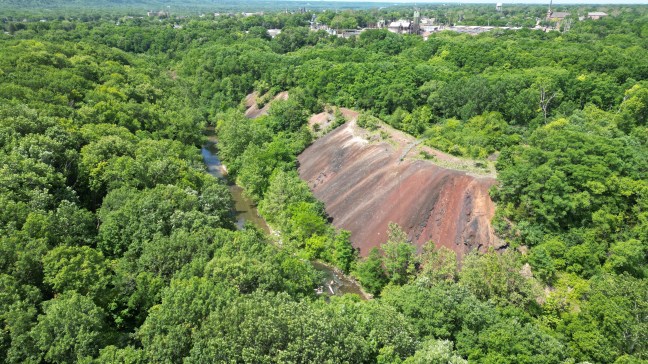
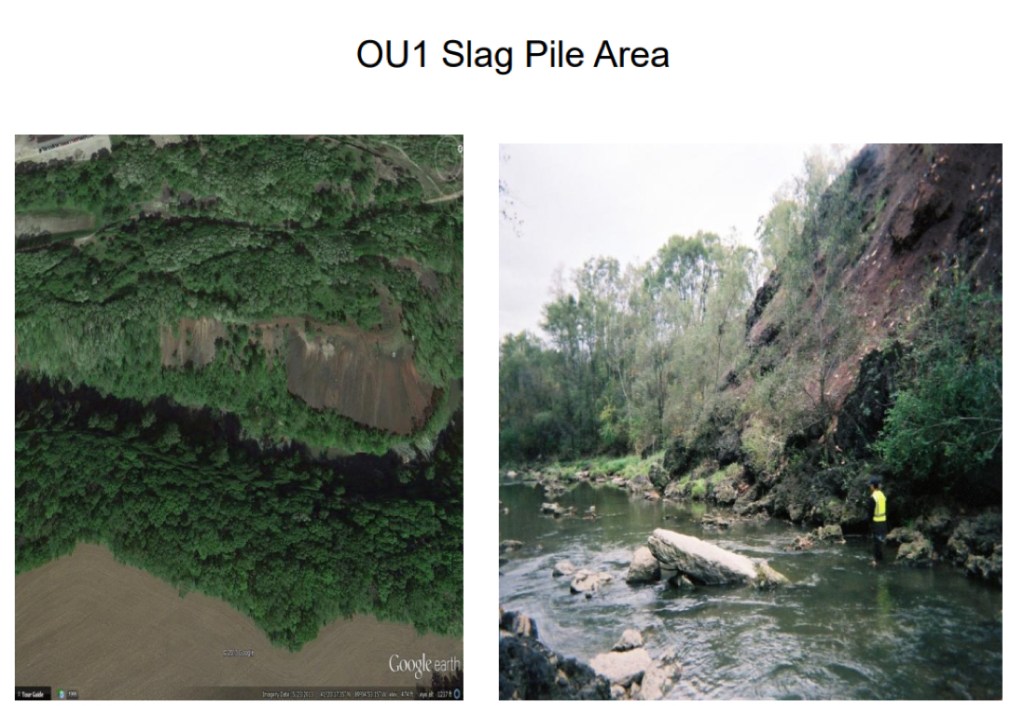
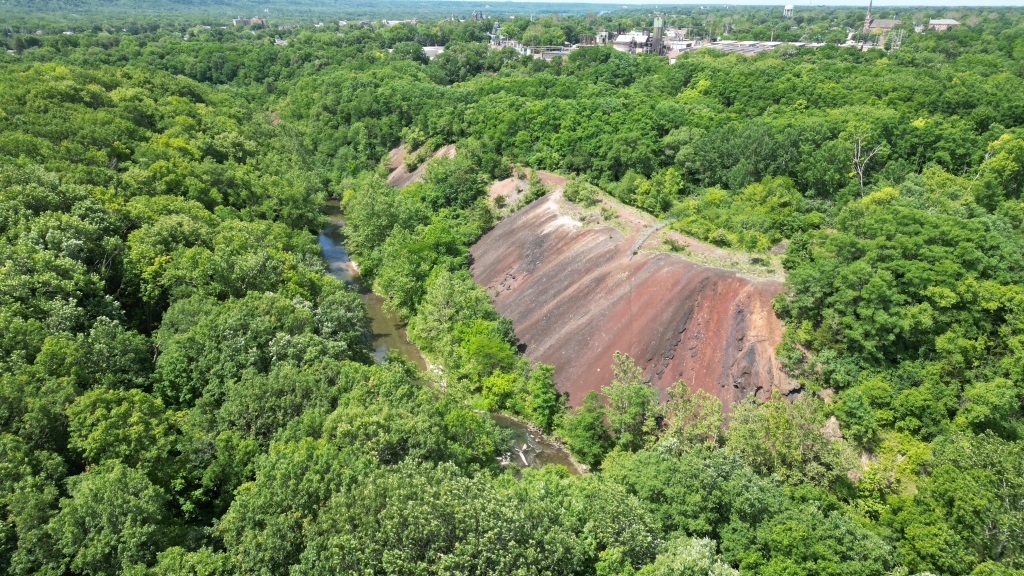
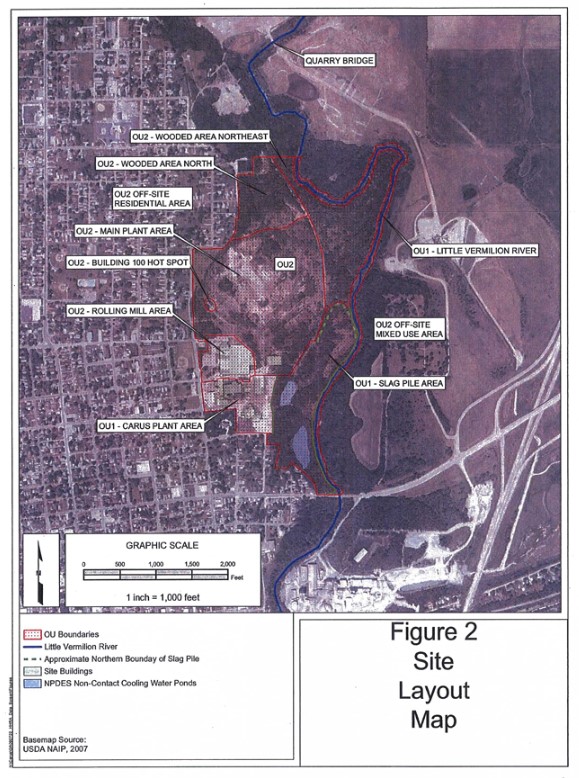
This 17-acre pile of slag and sinter that contains mercury, lead, cadmium and other chemical contaminants and heavy metals borders the Vermillion River at Carus Chemical's manufacturing plant in LaSalle Illinois. The Vermillion River empties into the Illinois River less than two miles from the plant and leads to the Mississippi River, which empties into the Gulf of Mexico, where there is a 6,300 mile dead zone where marine life cannot survive.

by: Karry King

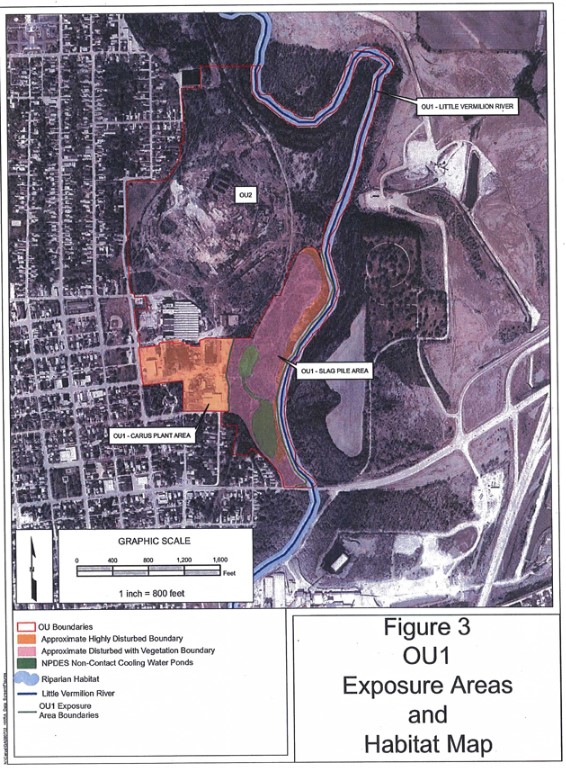
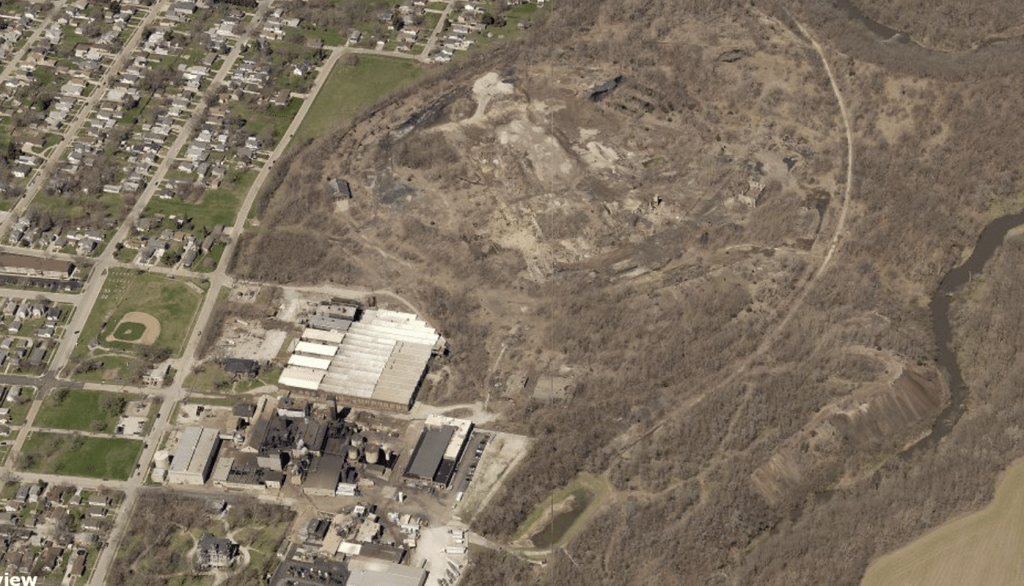
LA SALLE, IL – The U.S. Environmental Protection Agency is proposing changes to the groundwater contamination status and monitoring at the Matthiessen and Hegeler Zinc (M & H) Superfund site in La Salle, Illinois. The contaminated site includes nearly 5,000 homes, covers most of the city of La Salle and incorporates an 80-foot-tall slag pile owned by Carus Chemicals. The 17-acre pile of slag and sinter borders the Little Vermillion River, which empties into Illinois River. From there, it empties into the Mississippi River and the Gulf of Mexico.

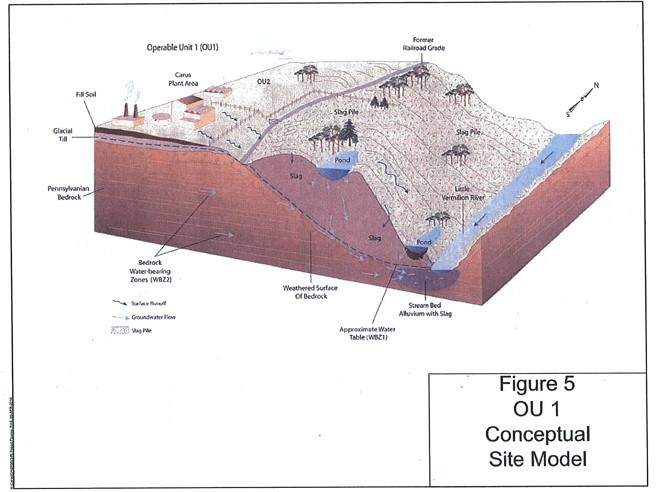
Clay will be used to cap the slag on the top and three sides, with terracing, which will allow wildlife and fish to nest along the base. A layer of soil will go over top of the clay so grass and native vegetation can be planted. The slag will be capped according to Illinois EPA 724 regulations.

“We didn’t originally include the groundwater because it was assumed there were institutional rules and ordinances in place, and it wasn’t a concern,” said Demaree Collier, EPA remedial project manager for the M & H Superfund site. Collier has managed the M & H site for over 20 years, before it was placed on the National Priority List.

Slag pile along the Vermillion River, Owned by Carus Chemical, La Salle, Illinois. The slag is leaching contaminates into the groundwater, according to the U.S. EPA.
Slag Pile along the Little Vermillion River, owned by Carus Chemical, Photo Credit: U.S. EPA

The towering pile of slag that resembles coal with burnt red sinter and appears as a wall that runs along the river, contains arsenic, lead, cadmium, copper, zinc, manganese and other contaminants, according to EPA documents. SVOCs and PCBs were also found onsite. The groundwater underneath exceeds the standards for allowable contaminants. The City of La Salle draws its drinking water from four wells located approximately three-quarters of a mile south of the contaminated site, with the closest one being approximately 3,700 feet away.

Carus Chemical slag pile is releasing contaminates into the Vermillion River, which leads to the Gulf of Mexico through the Illinois and Mississippi rivers.
Slag Pile along the Little Vermillion River, owned by Carus Chemical, Photo Credit: Jamie Hicks

The U.S. EPA defines principial threat waste as being highly toxic, highly mobile, and cannot generally be contained. If released, it would pose a significant threat to human health and the environment. Because slag can be contained by putting a cap on it, the EPA is posing a change to the 2017 Record of Decision (ROD) from principal threat waste to a low-level threat.

The proposed amendment will change the threat level status of the groundwater contamination from principal threat waste to low level threat waste. According to Collier, this change will allow the EPA to begin designing a plan that will encapsulate the slag waste and reduce groundwater contamination.

“The cap they’re going to use is an Illinois EPA regulated cap that allows for that kind of waste with hazardous components to be held within it because it meets a whole bunch of standards, so nothing can infiltrate the cap,” said Collier.

“The idea is once we do a source control, cap the giant slag pile, consolidate the onsite main industrial slag and cap that, it could potentially reduce leaching into the groundwater. The idea is that it will reduce the level of contamination that is leaching every day,” said Collier.

Slag Pile Cap Concept Drawings, U.S. EPA

The total cost of cleanup for the M & H Superfund site is estimated to be around $200 million. Once the ROD has been amended and signed, Collier said they will begin working on the cleanup design, which is expected to take approximately two years. After the design has been approved, the cleanup and capping will begin.

“Because we’ve been lucky enough that this site is receiving infrastructure bill money from the federal government, we’re getting an inpouring of millions of dollars just for this community, and we’re able to put that towards cleanup, so it’s happening a lot faster than it would have if we didn’t have this infrastructure money coming from the federal government,” said Collier. “The next step is negotiating with any responsible parties.”

M & H Superfund Site, Photo Credit: Google Earth

Sources and Contacts:

U.S. EPA, Collier, Demaree, 312-886-0214. Collier.demaree@epa.gov. Remedial Project Manager for the M & H Superfund Site.

U.S. EPA, Muhtsun, Ruth. 312-886-6595. muhtsun.ruth@epa.gov. Community Involvement Coordinator.

U.S. EPA, Matthiessen and Hegeler Zinc Company 2017 Record of Decision. https://semspub.epa.gov/src/document/05/508966

U.S. EPA, Matthiessen and Hegeler Zinc Company, La Salle, IL Site Documents & Data. https://cumulis.epa.gov/supercpad/SiteProfiles/index.cfm?fuseaction=second.docdata&id=0507364

U.S. EPA, Community Guide to Capping. https://semspub.epa.gov/work/HQ/401585.pdf 

Illinois Department of Public Health, Martin, Aaron. 217-785-5886. Aaron.Martin@Illinois.gov. Toxicology Section Chief.

Illinois Environmental Protection Agency, Brad Frost. 217-782-7027. Brad.Frost@Illinois.gov. Manager, Office of Community Relations.

Chemicals Used to Clean Water and Air May Be Polluting It

By: Karry King

LA SALLE, IL – Potassium permanganate is used to purify water and air, but people who live near the plant where the chemical is manufactured in LaSalle, Illinois, say that it has contaminated the air, soil and water in their community.     

Carus LLC manufactures potassium permanganate and sodium permanganate, chemicals that are used by municipalities throughout the world to treat water. Over 50 percent of the domestic water that’s consumed in the United States is treated with potassium or sodium permanganate, according to the U.S. Environmental Protection Agency. Potassium permanganate is also used in mining, fracking, refining crude oil and is a necessary ingredient in cocaine production. EPA documents confirmed that Carus is the only manufacturer of potassium permanganate in the western hemisphere.

In January 2023, a massive fire broke out at Carus’ LaSalle manufacturing plant that caused chemicals to rain onto the community and toxic smoke to fill the air. Since then, residents have been digging into Carus’ EPA records and learned that heavy metals and other toxins have been being emitted into the community for decades.

Community members worked with the Sierra Club to test 17 furnace filters taken from their homes after the fire. Test results revealed lead, mercury, barium, copper, zinc and manganese were present in the filters. Out of concern for their health, residents urged the EPA and City of La Salle to order Carus to pay for more testing and asked for ductwork inside their homes to be cleaned.

Residents brought up several health concerns at a town hall meeting Carus hosted in May. Lisa Dyas said her 14-year-old son spent 15 days in the hospital with severe pneumonia after the fire, and the fluid has barely left his lungs after four months. April Stevenson, a 40-year-old single mom, said she made two emergency room visits in one week because she couldn’t breathe when Carus resumed production after the fire. She now uses a breathing machine and is on several medications.

The U.S. EPA took air samples using mobile monitors set up north and south of Carus the evening of the fire. After 19 hours of ambient air testing, the EPA said they “did not detect any substances at levels of concern” and left the scene.

However, Denise Trabbic-Pointer, a Chemical Engineer and Certified Hazardous Material Manager Emeritus, who is volunteering in La Salle, said the U.S. EPA data was not continuous, and they used an OSHA standard for comparison. OSHA standards are written for workers who leave the jobsite at the end of the day, unlike La Salle residents who breathe the air 24/7. The Illinois EPA reviewed airborne particulate matter data, but that data doesn’t reflect the toxicity of airborne metals, which were found in the furnace filters.

Lead is known to damage the brain and nervous system in children. Manganese, which was also in the filters, and was found in high levels in soil that was tested, is linked to Parkinson’s disease, psychiatric impairments, decreased IQ scores, depression, anxiety, and cardiovascular and lung diseases, according to the 2023 study, Manganese Toxicity, by Evans and Masullo.

Carus did not provide a comment for this article but addressed the issue in a letter published in the News Tribune on May 7, 2023. Richard Landtiser, vice president of innovation and technology, wrote “The U.S. Environmental Protection Agency and Illinois Environmental Protection Agency took numerous soil and air tests. They concluded the environment was safe, with no hazards to public health.”

“The community is concerned that the extent of manganese in the soil and that remains in their furnace system ductwork has not been fully assessed,” said Denise Trabbic-Pointer. 

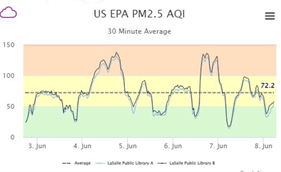
La Salle Public Library PurpleAir Realtime Data for current air quality:

Carus Spells Out Events It Believes Led To Fire

Jeremy Aitken, Starved Rock Media, Mar 30, 2023

“The chemical company says following a comprehensive review, the root cause of the La Salle plant fire was a combination of events stemming from damaged packaging of Potassium Permanganate.

A release from the company says the potassium was being transported from the warehouse to a waiting truck and was damaged in transit by a forklift truck.

Workers cleaned up spilled material and moved the damaged packaging to a separate location.

As the damaged packaging of chemicals was being moved, friction caused by the forklift truck moving a support pallet likely ignited material underneath the pallet.”

Update: Illinois Fire Marshal Report and warehouse security footage.

Read the full article: https://www.starvedrock.media/wlpo/carus-spells-out-events-it-believes-led-to-fire/article_1b1fbd26-cf37-11ed-85c4-ebd7be2b47f1.html?fbclid=IwAR0qwaVJLxQ_PPY2LAEu5UQuD5t7UP5ILnxDfWOcCT5Ybjp2YBBuPAHvDBY

EPA Recommendations from Sierra Club for Resident Safety after Carus Chemical Fire and Explosion

Denise Trabbic-Pointer is a Toxic and Remediation Specialist at the Sierra Club Club Michigan Chapter. She serves as a national technical resource volunteer for communities impacted by releases of toxins to air, water and/or soil.

She is a Chemical Engineer with a BS and MS in Hazardous Materials Management, an EHS professional and a Certified Hazardous Material Manager (CHMM) Emeritus. She retired in 2019 after 42 years at Dupont and a spin-off company, Axalta Coating Systems.

Denise sent the below letter outlining her concerns and recommendations to the EPA and LaSalle City Council about Carus Chemicals’ manufacturing plant, Ottawa storage building and toxic waste landfill.

Opinion | Write Team: Are we condemned to repeat the same mistake?

By Paul Wheeler, Shaw Local News

March 27, 2023

“Potassium permanganate. It is an oxidizer used throughout the country in the water purification process. The highlights of its classification include its ability to intensify fires and its known potential for explosion when in contact with combustible substances….

Following the Jan. 11 Carus explosion in La Salle, plans were made to move all stored materials from the La Salle location to an alternative site. Though investigation of the fire and explosion has not been completed, it might be fair to assume potassium permanganate was involved, with Carus being the largest producer of the substance in the country and the fact it was a substance released in the fire’s aftermath.

Oddly, that “alternative storage site” has turned out to be in the very midst of three of Ottawa’s primary elementary schools. Two of those schools, Central and Shepherd, are 300 yards from the main storage building. McKinley Elementary School is located approximately two blocks away….

There are about 1,000 students occupying all three schools on any given day. Young minds utterly unaware of the decisions being made on their behalf, or not being made on their behalf, by the adults in charge. Yet, given all the warehousing alternatives present in spacious La Salle County, why would one prefer a site so closely situated to so many vulnerable children? It boggles the mind.

Read the full article: 👇

https://www.shawlocal.com/mywebtimes/opinion/columns/2023/03/27/write-team-are-we-condemned-to-repeat-the-same-mistake/

Carus Chemical Refuses to give Insurance Company Name to City of LaSalle

Photo Credit: EPA

Carus Chemicals is refusing to give the City of LaSalle the name of their insurance company after the fire and explosion that caused chemicals and heavy metals to rain on residents’ homes and yards.

In response to Sierra Club’s testing of furnace filters from residents’ homes, which revealed barium, lead, copper, zinc, mercury and other heavy metals in residents homes after the fire, Brownfield Engineering, the environmental consulting firm hired by the City of LaSalle, is recommending testing 24 furnace filters for more chemicals and metals at a cost of $80,000.

News Tribune Article, March 24, 2023:

Carus ‘refuses’ to name its insurance provider, La Salle city officials say, Olivia Doak.

““Because we work with several insurance providers and we wanted to avoid unnecessary confusion while streamlining the process, we worked with them to hire the Davies Group to facilitate all claims,” Carus said in a statement Friday….

“”I assume Carus, as a good partner of the city of La Salle, would’ve presented who’s insuring them. So, that’s an issue. It’s a huge issue to residents of the city of La Salle and an affront to a sitting alderman,” Alderman Bob Thompson said. …Without knowing who the insurance provider is, Thompson said, there’s no way to know whether the insurance adjusters coming to residents’ homes are associated with a state licensed insurance company. Thompson said he recommends that residents not to talk to anyone who comes to their door unless they show they’re representing a licensed company.

“Make sure you’re getting identification, make sure you’re getting credentials,” La Salle Mayor Jeff Grove said. … Grove said he and other city officials thought it was “unusual” that Carus didn’t disclose the name of its insurance provider.

Full article: https://www.shawlocal.com/news-tribune/2023/03/24/carus-refuses-to-name-its-insurance-provider-la-salle-city-officials-say/?fbclid=IwAR0cgSnqhu0SwX-8D8Orkhud-W2xb8B2w7Fd1O4rtWoRAOepA2va97ednoA

Is Toxic Wastewater From Carus Chemicals Manufacturing Plant in LaSalle, Illinois, Contaminating the Vermillion River & Ending Up In The Gulf of Mexico?

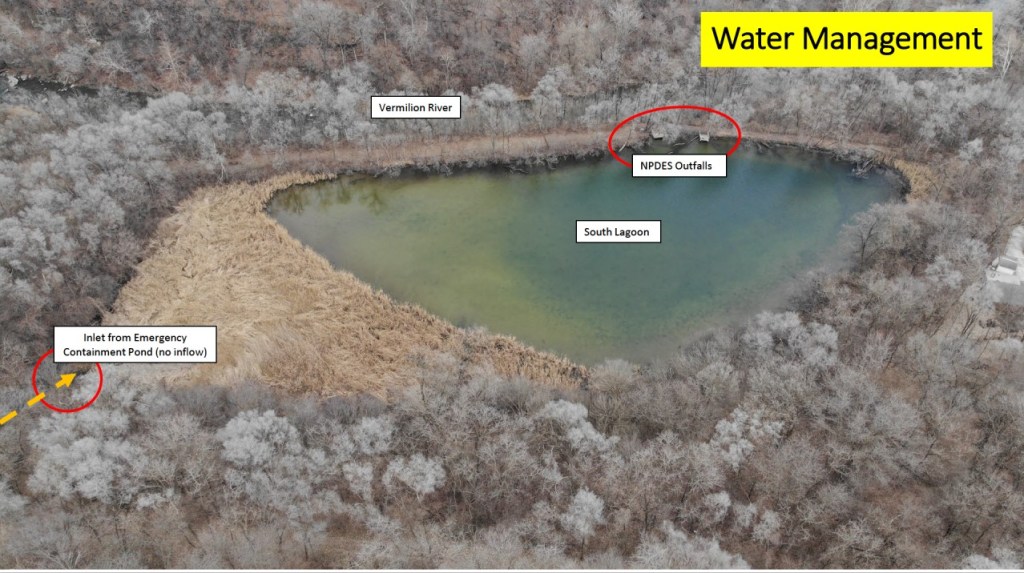
How much toxic waste from the Carus Chemical plant in La Salle, Illinois, ends up in the Vermillion River, pictured in these photographs, right next to Carus’ wastewater lagoons?

The Vermillion empties into the Illinois River just a few miles from Carus Chemicals’ LaSalle manufacturing plant. The Illinois River empties into the Mississippi River.

The Mississippi River empties into the Gulf of Mexico .

According to the National Oceanic and Atmospheric Administration (NOAA), there is a 6,334 square mile dead zone in the Gulf of Mexico, an area of low oxygen which kills marine life. https://oceantoday.noaa.gov/deadzonegulf-2021/welcome.html#:~:text=The%202021%20Gulf%20of%20Mexico,over%20the%20past%20five%20years.

Agriculture chemical runoff has been blamed for this dead zone, but have chemical factories, industrial polluters and mines along rivers that connect to the Mississippi River been taken into consideration or studied for their contribution to the dead zone?

The effects of Carus Chemicals’ actions have consequences far beyond LaSalle.

Chemical Wastewater Pipe Discharging into the Vermillion River from Carus Chemical

Visit Protect Starved Rock to learn more:

Blog: http://www.protectstarvedrock.wordpress.com

Facebook: www.facebook.com/ProtectStarvedRock

Carus Chemical Fire | Moment of Ignition | YouTube Video

Carus Chemicals company burst into flames on the edge of a residential neighborhood, and not one alarm can be heard.

Neighbors who saw the smoke and flames didn’t know what was happening.

One resident, Jamie Hicks, ran out of his house, got in his truck, and drove down the street to check on his neighbor whom he thought her house was on fire.

When he Jamie got out of his truck, a purple granular chemical fell from the sky and covered his entire body.

The chemical cloud forming above the fire in this video rained chemicals over three communities.

Samples of air filters taken from residents’ homes show barium, copper, lead, manganese, zinc and mercury.

Homes where chemicals landed are damaged from the oxidation of the chemicals and metals.

Paint is peeling, shingles are deteriorating, metal is rusting, and neighbors have been experiencing health problems that not exist before the fire.

Carus has not taken responsibility for cleanup since this event and has moved illegally stored chemicals out of the Apollo Warehouse to an old mall in Ottawa located near a residential neighborhood.

Do you think there should be alarms on chemical plants and tier 2 storage facilities in fence line communities to warn neighbors if a disaster occurs?

Illinois Fire Marshal Report & Secrutiy Footage inside the Carus warehouse: